
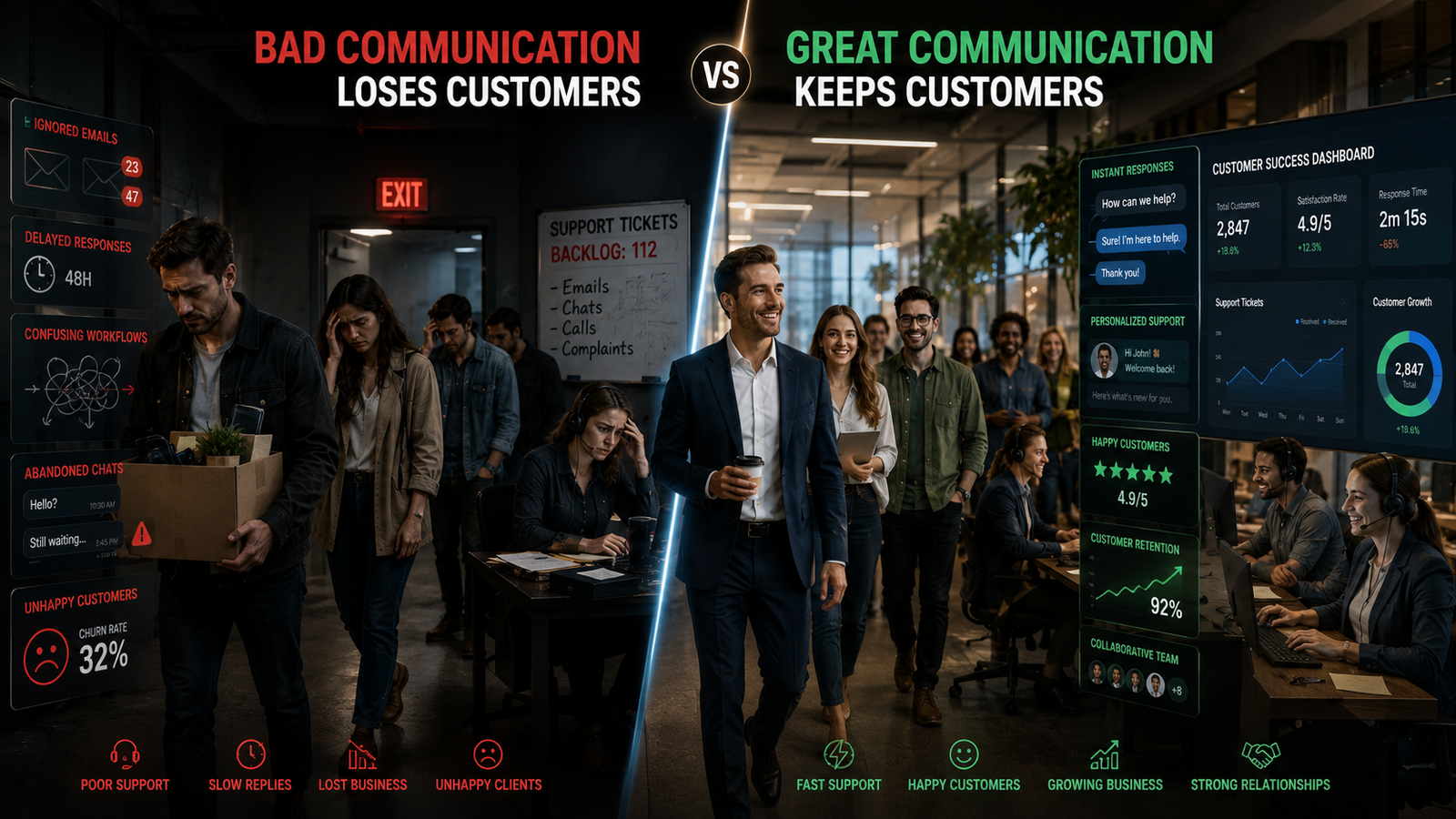
Why Customers Stop Doing Business With You
Introduction
Many businesses assume customers leave because:
• Competitors offer lower pricing
• Market conditions change
• Ads stop performing
• Demand decreases
But in reality, most customer drop-offs happen for much simpler reasons.
Customers leave because they feel:
• Ignored
• Confused
• Unimportant
• Frustrated
• Unsupported
Modern customers do not just buy products anymore.
They buy:
• Experience
• Trust
• Communication
• Reliability
• Convenience
And the moment those things disappear, customers quietly move elsewhere.
The Real Reasons Customers Leave Businesses
1. Slow Response Time
One of the fastest ways to lose a customer is delayed communication.
Today’s customers expect:
• Fast replies
• Real-time updates
• Quick problem resolution
• Transparent communication
When businesses:
• Take days to reply
• Ignore messages
• Delay updates
• Miss follow-ups
Customers begin losing confidence immediately.
In highly competitive industries, response speed often decides who wins the client.
Why Fast Communication Matters
Customers associate response speed with:
• Professionalism
• Reliability
• Respect
• Operational efficiency
A slow response creates doubt.
Customers start wondering:
• “Will support also be slow?”
• “What happens after payment?”
• “Can this company handle larger projects?”
Trust drops before the sale even happens.
2. Confusing Business Processes
Many companies unintentionally create friction in their customer journey.
Examples include:
• Complicated onboarding
• Unclear pricing
• Confusing workflows
• Too many approval steps
• Lack of proper guidance
Customers prefer simplicity.
If your process feels difficult, people naturally move toward businesses that make things easier.
Simplicity Builds Trust
The best businesses create:
• Smooth onboarding
• Clear communication
• Easy payment systems
• Transparent expectations
• Simple support processes
Customers should never feel lost while working with your business.
3. Lack of Personalization
Modern customers do not want robotic interactions.
They want businesses to:
• Understand their needs
• Remember previous conversations
• Offer relevant solutions
• Communicate personally
Generic responses damage relationships.
For example:
“Dear Customer, your issue is important to us.”
This sounds automated and emotionally disconnected.
Personalization creates emotional trust.
Even small gestures matter:
• Using customer names
• Referring to previous discussions
• Offering customized recommendations
• Understanding business goals
People stay where they feel understood.
4. Poor Support Experience
Great support creates loyal customers.
Bad support creates negative word-of-mouth.
One unresolved issue can permanently damage trust.
Common support mistakes include:
• Blaming customers
• Delayed issue resolution
• No ownership mentality
• Repeated explanations
• Unprofessional behavior
Support is not just about solving problems.
It is about making customers feel safe after purchasing.
Customers Remember Experiences More Than Products
A business may offer:
• Great pricing
• Excellent technology
• Strong features
But poor support can still destroy customer loyalty.
Because customers remember:
“How the company made them feel.”
A positive support experience increases:
• Retention
• Referrals
• Repeat business
• Brand reputation
Weak Follow-Ups Kill Business Growth
Most Businesses Lose Leads Silently
Many businesses generate leads successfully but fail during follow-up stages.
Common mistakes:
• No response after inquiry
• Random communication gaps
• Inconsistent updates
• Forgetting old leads
• No relationship nurturing
Most sales are not lost instantly.
They are lost gradually through silence.
Follow-Up Is Not Spamming
Professional follow-ups show:
• Commitment
• Reliability
• Interest
• Professionalism
Smart businesses use:
• CRM systems
• Automated reminders
• Email workflows
• Personalized outreach
to maintain strong communication consistently.
The Emotional Side of Customer Retention
Customers want to feel:
• Respected
• Valued
• Heard
• Supported
Businesses that ignore emotional experience struggle with long-term retention.
Customer loyalty is emotional before it becomes transactional.
Signs Your Business Is Losing Customers
Warning Signals You Should Never Ignore
• Increasing unanswered messages
• Declining repeat customers
• Lower referral rates
• More support complaints
• Shorter customer relationships
• Negative reviews mentioning communication
These are not small issues.
They are early signs of customer trust breakdown.
How Successful Businesses Retain Customers
1. Prioritize Communication
Reply quickly.
Be transparent.
Keep customers updated.
Consistency matters more than perfection.
2. Simplify the Customer Journey
Reduce unnecessary complexity.
Make:
• Payments easier
• Support faster
• Onboarding smoother
• Communication clearer
3. Personalize Customer Interactions
Treat customers like people, not ticket numbers.
Understand:
• Their goals
• Their challenges
• Their expectations
4. Build Strong Support Systems
Train teams properly.
Resolve issues proactively.
Take ownership.
Great support creates long-term loyalty.
5. Use CRM and Automation Smartly
Modern CRM systems help businesses:
• Track conversations
• Automate follow-ups
• Improve response times
• Organize customer data
Technology should improve relationships, not replace human connection.
The Biggest Truth About Customer Loyalty
Customers do not expect perfection.
They expect:
• Honesty
• Communication
• Reliability
• Respect
Businesses that consistently deliver these things naturally retain customers longer.
Conclusion
Most customers do not leave suddenly.
They leave slowly after repeated poor experiences.
A delayed response.
A confusing process.
A generic interaction.
An ignored issue.
Over time, small frustrations become broken trust.
The companies that grow sustainably are not always the ones with:
• The biggest ads
• The fanciest branding
• The lowest prices
They are the businesses that make customers feel:
• Heard
• Valued
• Supported
• Important
Because in modern business:
Customer experience is the real competitive advantage.




Login to comment
To post a comment, you must be logged in. Please login. Login
Comments (10)
By Rahul Sharma
Jun 26, 2026Excellent explanation with practical examples.
By Priya Verma
Jun 26, 2026One of the best blog posts I have read recently.
By Arjun Patel
Jun 26, 2026Well written and packed with useful insights.
By Ananya Kapoor
Jun 26, 2026Simple language and excellent information.
By Michael Johnson
Jun 26, 2026Helpful content with real-world relevance.
By Emily Carter
Jun 26, 2026Excellent explanation with practical examples.
By Daniel Kim
Jun 26, 2026One of the best blog posts I have read recently.
By Sophia Martinez
Jun 26, 2026Well written and packed with useful insights.
By Liam Wilson
Jun 26, 2026Simple language and excellent information.
By Neha Singh
Jun 26, 2026Helpful content with real-world relevance.