The Harsh Truth About Modern Startup Founders: Leadership Is More Than a Title
Introduction
In today’s digital-first business world, startup culture has become highly glamorized.
Everywhere you look, social media is flooded with:
• “Founder & CEO” bios
• Luxury startup aesthetics
• Fake hustle culture
• AI-generated motivational content
• Growth claims with little substance
The word “Founder” has become one of the easiest titles to claim online.
But building a real company?
That’s still one of the hardest things in the world.
Because true entrepreneurship is not about appearances.
It is about responsibility, execution, sacrifice, trust, and leadership.
And unfortunately, many modern startups fail at exactly those things.
The Illusion of Modern Startup Culture
Everyone Wants the Title — Few Want the Responsibility
Today, many people are obsessed with looking successful before actually becoming successful.
A polished LinkedIn profile.
A premium-looking website.
Fancy terms like:
• AI-powered
• Scalable SaaS
• Global tech company
• Innovation-driven solutions
But when you look deeper, the foundation often looks weak.
Some companies:
• Cannot retain employees
• Have no long-term systems
• Deliver copied solutions
• Operate without transparency
• Focus more on optics than operations
The harsh truth is simple:
A company’s real strength is not measured by branding.
It is measured by what happens behind the scenes.
The Biggest Red Flags in Fake Founder Culture
1. No Loyal Team
One of the strongest indicators of leadership quality is employee retention.
If a company claims:
“10+ years in business”
But:
• No employee stays beyond 1–2 years
• Constant hiring never stops
• Team members frequently disappear
Then something is broken internally.
People do not stay where they feel:
• Exploited
• Disrespected
• Underpaid
• Replaceable
Great companies create environments where people grow for years.
That’s why companies like:
• Infosys
• TCS
• Apple
• Microsoft
still have employees who remain loyal for decades.
Culture creates loyalty.
Not motivational posts.
2. Selling Templates as Innovation
Another growing problem is fake technical expertise.
Many businesses:
• Buy ready-made themes
• Modify templates
• Use copied dashboards
• Rename existing systems
And then market them as:
“Custom AI-powered enterprise solutions.”
Real software engineering is not:
• Swapping UI colors
• Editing logos
• Installing plugins
Real innovation requires:
• Architecture thinking
• Scalability planning
• Security systems
• Product understanding
• Problem-solving capability
Clients may not immediately understand technical depth.
But eventually, weak execution always gets exposed.
3. Fake Branding and Artificial Authority
Modern startup branding often focuses more on perception than reality.
You’ll see:
• “Global CEO” in bio
• Fake international lifestyle projection
• AI-generated thought leadership posts
• Inflated project numbers
• Purchased engagement
But when operational reality is checked:
• No structured company setup
• No legal registrations
• No trademarks
• No actual scalable product
• No long-term team
Branding is important.
But branding without substance eventually becomes noise.
4. Toxic Leadership Hidden Behind Hustle Culture
Perhaps the darkest side of fake entrepreneurship is toxic management.
Many employees silently deal with:
• Delayed salaries
• Unpaid overtime
• Weekend work pressure
• Micromanagement
• Public blame culture
• Emotional manipulation
Meanwhile:
• Founders take credit for success
• Employees absorb blame for mistakes
This creates fear-driven workplaces instead of growth-driven organizations.
And fear never builds innovation.
Trust does.
Leadership Is Not Control — It Is Responsibility
What Real Leaders Actually Do
True founders:
• Protect their teams
• Accept responsibility
• Share credit
• Invest in people
• Build systems
• Deliver outcomes consistently
A real leader understands:
Employees are not disposable resources.
They are the foundation of the company itself.
Without strong teams:
• No product scales
• No clients stay
• No culture survives
Why Employees Matter More Than Marketing
The Strongest Companies Are Built Internally First
Many startups spend heavily on:
• Branding
• Social media
• Ads
• Founder visibility
But ignore:
• Employee wellbeing
• Team growth
• Internal systems
• Operational maturity
That is backwards.
Because:
Happy teams create strong products.
Strong products create loyal clients.
Loyal clients create sustainable growth.
No amount of social media marketing can permanently hide operational weakness.
Execution Always Wins
Clients Care About Results — Not Titles
Most clients ultimately care about:
• Delivery quality
• Communication
• Reliability
• Transparency
• Problem-solving ability
Not:
• Fancy founder bios
• Luxury office pictures
• Startup jargon
Execution is the ultimate truth detector in business.
And over time:
Reality always defeats hype.
The WhatsApp Lesson Every Founder Should Understand
One important point many founders ignore:
The employee you undervalue today may become your strongest competitor tomorrow.
History already proved this.
Jan Koum, once an employee at Yahoo, later built WhatsApp — one of the world’s most impactful communication platforms.
Great leaders understand:
Talent grows where it is respected.
Toxic leaders create competitors.
Strong leaders create legacy.
What Founders Should Actually Focus On
1. Build Long-Term Trust
Trust is more valuable than temporary hype.
Build trust through:
• Transparency
• Timely payments
• Ethical behavior
• Honest communication
2. Build Systems, Not Just Branding
Strong businesses require:
• Structure
• Documentation
• Processes
• Accountability
• Technical quality
Without systems, growth becomes unstable.
3. Invest in Team Culture
A loyal team is one of the biggest competitive advantages any company can have.
People stay where they:
• Feel respected
• Feel safe
• Feel valued
• See growth opportunities
4. Focus on Real Innovation
Innovation is not a buzzword.
Real innovation solves:
• Real business problems
• Real customer pain points
• Real operational inefficiencies
Signs of Authentic Entrepreneurship
A genuine founder usually:
• Delivers more than they promise
• Takes responsibility during failures
• Gives credit publicly
• Builds quietly before marketing loudly
• Invests in people and systems
• Thinks long-term instead of chasing validation
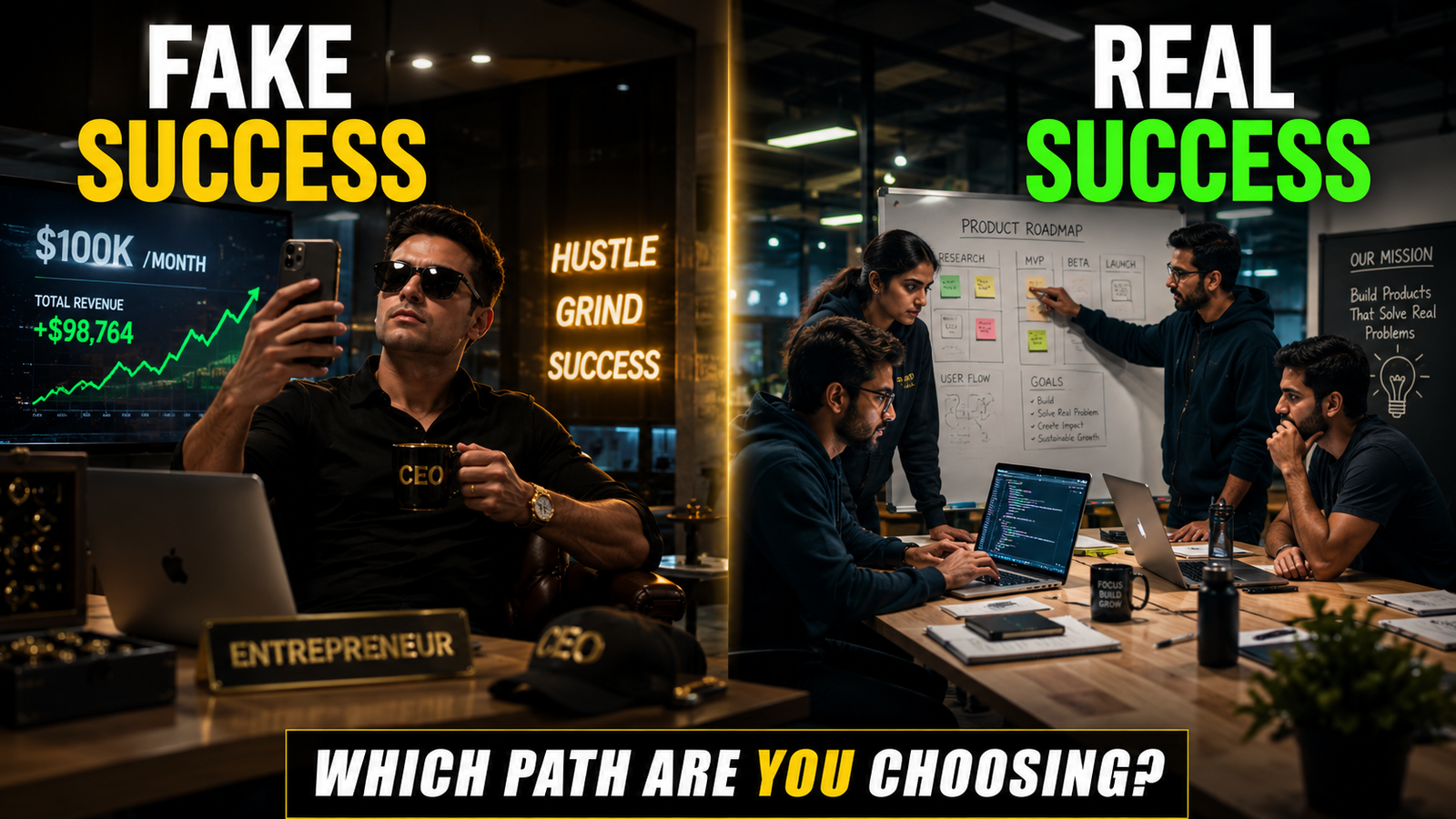
Real founders build companies.
Fake founders build appearances.
Conclusion
The startup ecosystem does not need more fake CEOs.
It needs:
• Better leaders
• Ethical founders
• Strong execution
• Healthy work culture
• Real innovation
• Honest companies
Because entrepreneurship is not about adding “Founder” to a social media bio.
It is about building something valuable enough that:
• Clients trust it
• Employees believe in it
• Teams stay for years
• Products solve real problems
• People respect the company even when nobody is watching
At the end of the day:
Titles can be self-assigned.
But leadership must be earned.




Comments (10)
By Rahul Sharma
Jun 26, 2026Very insightful article, learned something new today.
By Priya Verma
Jun 26, 2026This article is clear, informative, and easy to understand.
By Arjun Patel
Jun 26, 2026Really helpful content for beginners and professionals alike.
By Ananya Kapoor
Jun 26, 2026This blog answered many of my questions.
By Michael Johnson
Jun 26, 2026Loved the practical approach used in this post.
By Emily Carter
Jun 26, 2026Very insightful article, learned something new today.
By Daniel Kim
Jun 26, 2026This article is clear, informative, and easy to understand.
By Sophia Martinez
Jun 26, 2026Really helpful content for beginners and professionals alike.
By Liam Wilson
Jun 26, 2026This blog answered many of my questions.
By Neha Singh
Jun 26, 2026Loved the practical approach used in this post.