Custom App Development Services | Build Scalable Mobile Apps for Business Growth
Mobile applications have become an essential part of modern business strategy. Customers expect seamless digital experiences, employees need productivity tools that work from anywhere, and organizations require secure systems capable of supporting continuous growth.
While app marketplaces are filled with ready-made solutions, they rarely match the unique requirements of growing businesses. Generic software often forces organizations to adapt their processes around software limitations rather than enabling software to support their business goals.
This is why custom app development has become increasingly valuable.
A custom mobile application is built specifically for your business, your customers, and your operational workflows. Every feature, interface, integration, and security measure is designed around your objectives instead of unnecessary functionality.
Whether you're launching a startup, digitizing internal operations, building a customer-facing application, or creating an enterprise mobility solution, custom app development provides the flexibility and scalability needed for long-term success.
This comprehensive guide explores why custom app development matters, its benefits, implementation process, costs, return on investment, and future trends shaping mobile technology.
What Is Custom App Development?
Custom app development is the process of designing, developing, testing, and maintaining mobile applications tailored specifically to a business's unique needs.
Unlike off-the-shelf software, custom applications are built to support your business processes, customer experience, and long-term growth strategy.
Custom applications may include:
These applications can be developed for:
Why This Matters For Businesses
Today's customers expect fast, secure, and intuitive mobile experiences.
Businesses also require applications that:
Business Challenges Solved by Custom Apps
| Challenge |
Custom App Solution |
| Manual Processes |
Workflow Automation |
| Poor Customer Experience |
Personalized Mobile Experience |
| Limited Scalability |
Flexible Architecture |
| Security Risks |
Enterprise Security |
| Disconnected Systems |
API Integration |
| Generic Features |
Business-Specific Functionality |
Custom applications become strategic assets that create long-term competitive advantages.
Common Problems Businesses Face
Organizations often struggle with:
1. Limited Functionality
Ready-made apps rarely support every business requirement.
2. Poor User Experience
Generic interfaces reduce customer engagement.
3. Security Limitations
Shared platforms may not provide enterprise-grade protection.
4. Integration Challenges
Existing software cannot easily connect with third-party applications.
5. Scaling Difficulties
Business growth often exceeds software capabilities.
Signs You Need This Solution
Your organization should consider custom app development if:
-
Existing software limits productivity.
-
Manual workflows consume significant time.
-
Customer engagement is declining.
-
Mobile users expect better experiences.
-
Business processes are unique.
-
Security requirements are increasing.
-
Existing applications cannot scale.
-
Multiple systems require integration.
Benefits Of Implementing Custom App Development
Personalized User Experience
Applications are designed around customer expectations.
Higher Productivity
Employees complete tasks faster.
Better Security
Enterprise-grade authentication and encryption.
Greater Scalability
Applications evolve alongside your business.
Improved Customer Satisfaction
Personalized experiences improve loyalty.
Competitive Advantage
Unique functionality differentiates your business.
Detailed Explanation Of Cross-Platform Mobile Apps
What Are Cross-Platform Apps?
Cross-platform development allows businesses to create a single application that runs on both Android and iOS devices.
Popular frameworks include:
Benefits
Example
A retail company launches one mobile application that serves Android and iPhone users without maintaining separate development teams.
Detailed Explanation Of Tailored UI/UX Design
Why UI/UX Matters
Users judge an application within seconds.
Professional UI/UX design focuses on:
-
Simplicity
-
Accessibility
-
Navigation
-
Performance
-
Visual consistency
Benefits
-
Higher engagement
-
Better retention
-
Improved conversions
-
Reduced learning curve
Example
An intuitive banking application enables customers to transfer funds within a few simple steps.
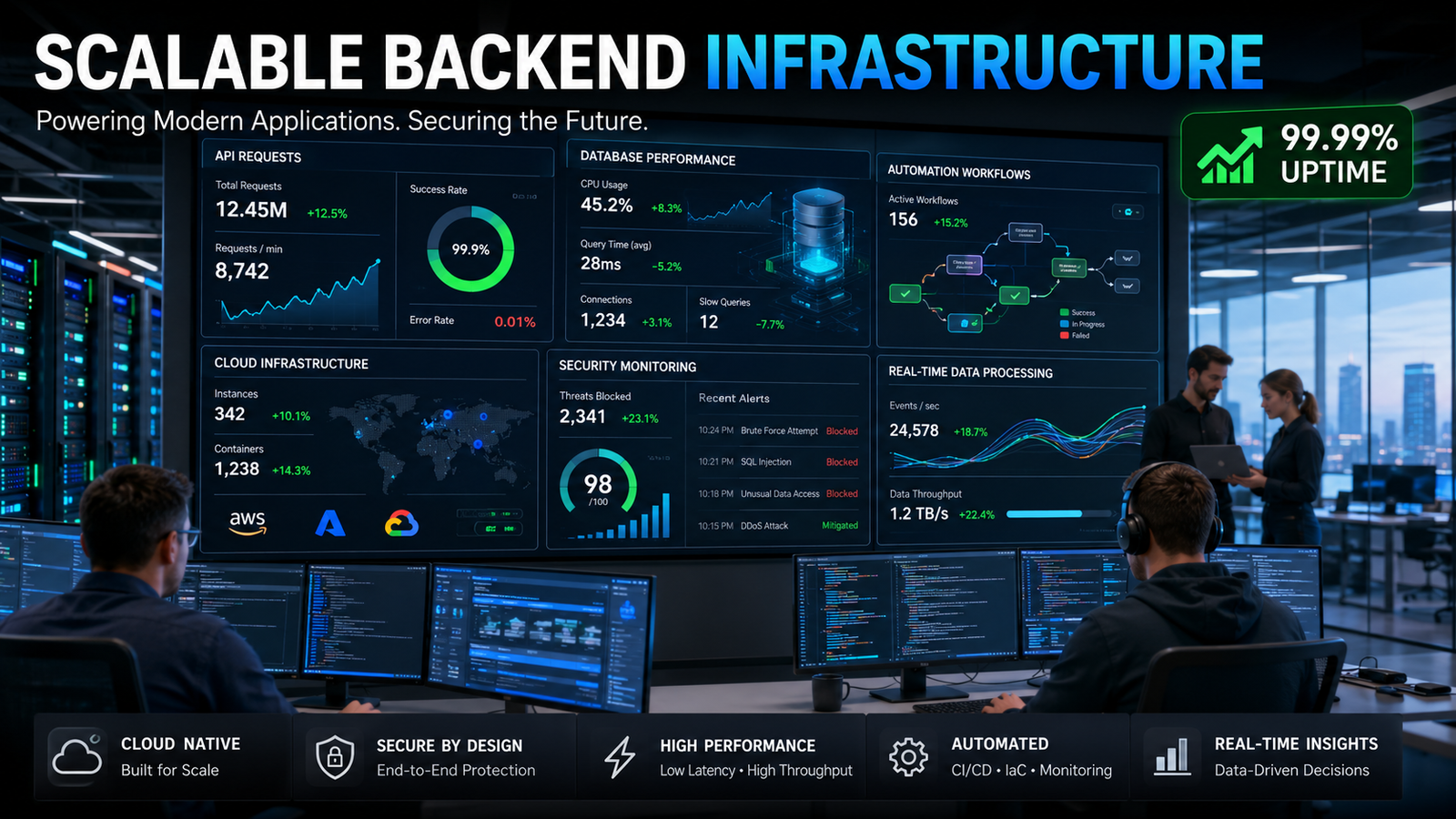
Detailed Explanation Of Secure Backend Systems
What Is Backend Development?
The backend powers the application's core functionality.
It manages:
-
Authentication
-
Databases
-
APIs
-
Business logic
-
Security
-
Notifications
Security Features
-
Encrypted APIs
-
Token authentication
-
Role-based access
-
Data encryption
-
Audit logging
Example
A healthcare application securely stores patient information while complying with privacy regulations.
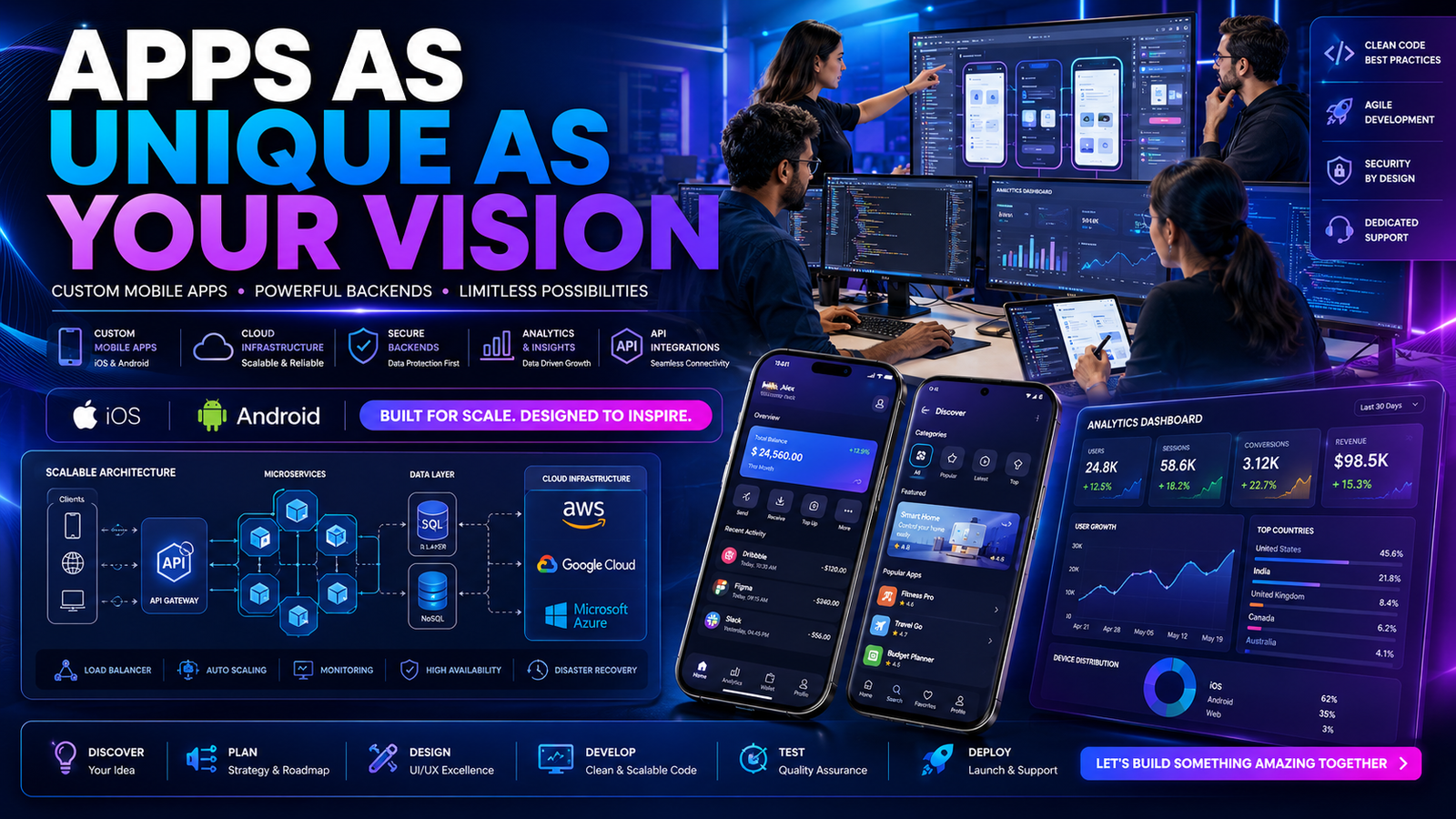
Detailed Explanation Of Scalable Architecture
Why Scalability Matters
Businesses grow.
Applications should support increasing:
-
Users
-
Transactions
-
Data
-
Features
-
Integrations
Scalable Architecture Includes
-
Cloud Infrastructure
-
Microservices
-
Load Balancing
-
API-First Design
-
Database Optimization
Benefits
Real Business Example
A logistics company replaced paper-based operations with a custom mobile application.
The app included:
Results:
Startup Example
A startup launched a subscription-based mobile platform using cross-platform development.
Features included:
-
User authentication
-
Secure payments
-
Push notifications
-
Analytics dashboard
Results:
-
Faster market launch
-
Lower development costs
-
High customer engagement
-
Rapid scalability
Enterprise Example
A manufacturing enterprise implemented a custom workforce management application.
Capabilities included:
-
Employee scheduling
-
Inventory tracking
-
Internal communication
-
Business analytics
The application improved operational efficiency while supporting thousands of employees across multiple locations.
Step By Step Implementation Guide
Step 1: Define Business Objectives
Identify:
-
Target audience
-
Business goals
-
Core features
Step 2: Plan User Experience
Design:
-
Wireframes
-
User journeys
-
UI prototypes
Step 3: Select Technology Stack
Choose:
-
React Native
-
Flutter
-
Native Android
-
Native iOS
Step 4: Build Backend Infrastructure
Develop:
-
APIs
-
Authentication
-
Database
-
Security
Step 5: Develop Mobile Application
Implement features iteratively.
Step 6: Test Thoroughly
Validate:
-
Performance
-
Security
-
Compatibility
-
User experience
Step 7: Launch
Deploy applications to app stores.
Step 8: Monitor & Improve
Continuously enhance features using analytics and user feedback.
Common Mistakes To Avoid
Businesses often make mistakes such as:
-
Skipping user research.
-
Ignoring scalability.
-
Poor backend planning.
-
Weak security implementation.
-
Complicated interfaces.
-
Insufficient testing.
-
Lack of post-launch maintenance.
Best Practices
Design Around Users
Prioritize usability.
Build Securely
Protect customer information.
Develop API-First
Enable future integrations.
Optimize Performance
Ensure fast loading and smooth navigation.
Monitor Analytics
Continuously improve user experience.
Plan For Growth
Build scalable infrastructure from day one.
Tools And Technologies Used
Modern custom mobile applications commonly use:
Mobile Frameworks
-
React Native
-
Flutter
-
Kotlin
-
Swift
Backend Technologies
-
Laravel
-
Node.js
-
Python
-
Go
Databases
Cloud Platforms
-
AWS
-
Microsoft Azure
-
Google Cloud
DevOps
-
Docker
-
Kubernetes
-
CI/CD Pipelines
Cost Considerations
| Development Area |
Investment Level |
| UI/UX Design |
Medium |
| Mobile Development |
Medium to High |
| Backend Development |
Medium |
| Cloud Infrastructure |
Variable |
| Testing & QA |
Essential |
| Ongoing Maintenance |
Continuous |
The investment depends on application complexity, features, integrations, and scalability requirements.
ROI And Business Impact
Businesses investing in custom mobile applications commonly achieve:
-
Increased customer engagement
-
Higher operational efficiency
-
Better employee productivity
-
Improved customer retention
-
Reduced manual processes
-
New revenue opportunities
Major ROI Drivers
-
Process automation
-
Customer convenience
-
Mobile accessibility
-
Business scalability
-
Stronger brand loyalty
Future Trends
AI-Powered Mobile Apps
Smarter user experiences through artificial intelligence.
Super Apps
Multiple business services within one application.
Progressive Web Apps (PWAs)
App-like experiences delivered through browsers.
IoT Integration
Connected devices interacting with mobile applications.
Augmented Reality (AR)
Interactive shopping, education, and training experiences.
Low-Code Development
Faster application delivery for business workflows.
Why Choose NetSwap Technologies
NetSwap Technologies specializes in custom mobile application development for startups, SMEs, and enterprises. We design and develop secure, scalable, and high-performance Android, iOS, and cross-platform applications tailored to unique business requirements. Our expertise includes UI/UX design, cloud infrastructure, secure backend development, API integration, business automation, SaaS platforms, CRM systems, ERP solutions, and enterprise mobility applications.
Our Mobile App Expertise
-
Custom Mobile App Development
-
Android App Development
-
iOS App Development
-
Cross-Platform Apps
-
React Native Development
-
Flutter Development
-
Enterprise Mobility Solutions
-
Secure Backend Development
-
API Integration
-
Cloud-Based Applications
NetSwap Technologies partners with businesses to transform innovative ideas into scalable mobile applications that deliver exceptional user experiences and long-term business value.
Frequently Asked Questions
What is the advantage of custom app development?
Custom applications are designed specifically for your business processes, providing better flexibility, security, scalability, and performance.
Should I choose native or cross-platform development?
The choice depends on your budget, timeline, performance requirements, and target audience. Cross-platform solutions often provide faster development and lower costs.
Can custom mobile apps integrate with existing software?
Yes. Modern applications can integrate with CRM, ERP, payment gateways, cloud platforms, analytics systems, and other business software through secure APIs.
How secure are custom mobile applications?
Professionally developed applications include encrypted communication, secure authentication, role-based access, and backend security best practices.
How long does mobile app development take?
Timelines vary based on complexity, features, integrations, and testing requirements.
Can custom apps scale as my business grows?
Yes. Modern cloud-based architecture enables applications to support increasing users, data, and business operations.
Final Thoughts
Every successful business is unique, and its mobile application should reflect that uniqueness. Custom app development empowers organizations to build solutions that align perfectly with their workflows, customers, and long-term goals.
By investing in secure backend systems, scalable architecture, user-centered design, and cross-platform development, businesses can create powerful digital products that improve customer experiences, streamline operations, and support sustainable growth.
Rather than adapting your business to generic software, custom applications allow technology to adapt to your business.
Contact NetSwap Technologies
Need Help Building a Custom Mobile Application?
NetSwap Technologies helps businesses develop:
Whether you're building a startup MVP, enterprise mobility solution, customer-facing mobile app, or business automation platform, our experienced development team can deliver a secure, scalable, and future-ready solution tailored to your vision.
Contact Us Today
Let's turn your app idea into a powerful digital product that drives business growth, improves customer experiences, and creates lasting competitive advantage.
FAQ Section
What is custom app development?
Custom app development is the process of designing and building mobile applications specifically for a business's unique requirements instead of using pre-built software.
Why choose custom apps over ready-made apps?
Custom applications provide greater flexibility, better security, scalability, personalized features, and seamless integration with existing business systems.
What platforms can custom apps support?
Modern custom applications can be developed for Android, iOS, or both using cross-platform technologies like React Native and Flutter.
How long does it take to build a custom mobile app?
Development timelines depend on app complexity, features, integrations, and testing requirements. Basic apps may take a few months, while enterprise applications require longer development cycles.
Are custom mobile apps secure?
Yes. Professional custom apps implement secure authentication, encrypted APIs, secure databases, and modern cybersecurity practices.




Comments (0)